What Is a Drone Jammer and How Anti-Drone Systems Stop UAVs
- Terim Sheilth
- Dec 17, 2025
- 4 min read

The commercial drone sector is on fire. As per the latest projections, the industry is expected to hit $54.6 billion by 2030, as reported by Statista. The growing need for drones in areas like agriculture, delivery, and surveillance is a big opportunity. However, it also poses a major security challenge. Unauthorized drones threaten the security of key sites like airports, military bases, and private properties. So, we need quick and effective solutions to deal with them.
Understanding the Drone Jammer Technology
Drone jammers are key tools in counter-unmanned aerial systems (C-UAS). They focus on stopping unauthorized drones by cutting off or blocking their communication signals. These devices work by creating radio noise or interference. This affects the radio channels that the drone uses to communicate.
Most drones, be they consumer or commercial, are said to function within a certain range of frequencies, generally at 900 MHz, 2.4 GHz, and 5.8 GHz. These frequencies are also used for WiFi and Bluetooth. This makes them suitable for targeted interference. A drone jammer sends strong signals on certain frequencies. This blocks communication between the drone and its operator. As a result, the drone must follow its preset fail-safe procedures.
How Anti-Drone Jammer Gun Systems Work
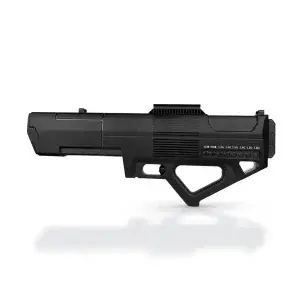
The anti-drone jammer gun is very portable and easy to use. In appearance and operation, these tools are similar to a gun, which makes it possible for the user to simply point, shoot, and activate the jamming signals. Companies like UAV Defence make advanced handheld tools. These tools can detect and jam signals. They work effectively at distances of up to 3 kilometers to neutralize drones.
On a drone jammer gun, the operator emits directional electromagnetic pulses that can target different frequency bands at the same time. This multi-band strategy makes the jammer effective against various drone models. It works well with consumer DJI products and custom-made UAVs. The directional antenna design reduces interference with nearby electronics. At the same time, it boosts the impact on the target drone.
Types of Drone Jammer Configurations
Modern drone jammer technology offers various configurations to suit different operational scenarios. Handheld devices like the anti-drone jammer gun allow security staff to move fast. They can easily deploy the device to protect VIPs, events, or temporary perimeters. Such portable units generally weigh 5-7 kilograms and can run up to 60 minutes on battery power.
Vehicle-mounted systems offer longer range and higher power. So, they are ideal for protecting mobile convoys and creating mobile security zones. Fixed installations provide lasting security for critical infrastructures such as airports, military bases, and power stations. UAV Defence offers solutions that blend radar detection with automated jamming. This creates a full airspace security network.
Wearable systems are the latest in personal anti-drone protection. They come from military research aimed at helping personnel in hostile environments. This includes next-gen personal anti-drone gear. These light solutions make one soldier able to fend off drone surveillance or a strike without the need to carry heavy equipment.
Technical Considerations and Limitations
Drone jammer technology is a great tool; however, the operator needs to be aware of the restrictions of the tool. A fully autonomous drone can still fly its route, even if it loses GPS and control signals. This is because the drone is probably using an inertial navigation system. Military drones use technologies like frequency-hopping spread spectrum (FHSS) and encrypted communications. These make it tough to jam their signals.
Moreover, there are limitations due to distance that pose another problem. A handheld anti-drone jammer gun works best at 1-3 kilometers. In contrast, fixed installations can reach 5-10 kilometers. To jam a drone, you first need to know its location. That’s why radar systems, RF analyzers, and electro-optical sensors are used. They help detect threats from all sides.
The Future of Counter-Drone Technology
Counter-measures have to be as advanced as drone technology, which has been perpetually evolving. The new solutions use artificial intelligence and machine learning. They make threat identification more accurate and speed up response time. UAV Defence is developing smart jamming systems. These systems can quickly switch between drone protocols without stopping. This reduces collateral interference and boosts effectiveness against identified targets.
Advanced integration is another major change to the direction of the developers' research. Recent anti-drone systems combine various technologies. They upgrade radar detection, RF analysis, electro-optical tracking, and selective jamming into one command and control platform. These multi-layered schemes provide the organization with various capabilities and strong protection against advanced threats.
Key Takeaway
The demand for anti-drone solutions is going up just as fast as the commercial drone industry. Drones are becoming more advanced to increase their range, speed, and add swarm-like behavior. So, counter-drone systems must also be upgraded to effectively combat them. Organizations needing airspace security should engage with a trusted provider like UAV Defence. This helps find a solution that matches their threat profile and operational needs.
Understanding how a drone jammer works and its role in anti-drone systems helps security professionals, facility managers, and decision-makers make better choices. This knowledge is key to protecting their operations from illegal aerial threats. Both sides keep upgrading their technology in this security trap. However, only full detection and response abilities can ensure safe airspace.


Comments